
Beginner container rose first-month checklist
A container rose first-month checklist is a decision-support frame for choosing, setting up, and observing a potted rose during its early adjustment period. It helps a beginner connect the pot, soil, watering, sunlight, drainage, starter supplies, and fertilizer decisions before those choices become care problems.
Beginner rose care can feel uncertain because a container rose responds to pot size, rose type, weather, light, soil moisture, and early growth condition. A potted rose may need different care checks on a hot balcony, a shaded patio, or a rainy outdoor spot. The first month should focus on visible fit, steady moisture judgment, simple handling, and avoiding avoidable mistakes rather than chasing fast results.
The checklist prioritizes two stages: before setup, check whether the pot, drainage, soil, sunlight, and starter supplies fit the rose; after planting, watch watering behavior, growth response, weak light, overwatering signals, and unsuitable pot conditions. This keeps the first month practical without turning the page into a product list, full maintenance calendar, or advanced rose troubleshooting guide.
First-month container rose care scope for beginners
First-month container rose care is the beginner scope for establishing setup stability, watering control, light exposure, and awareness of early stress before moving into broader maintenance decisions. This period focuses on how a container rose adapts to its pot, drainage, soil, and placement conditions. The goal is to build a reliable care foundation rather than manage long-term rose maintenance.
First-month care depends on how the container rose responds to moisture levels, drying speed, sunlight, and local weather conditions. Watering control may vary because soil moisture can change with pot size, soil characteristics, temperature, and placement. Light exposure should be assessed through growth response and overall plant condition rather than assumptions about a location. This maintenance boundary connects naturally with the wider Container Rose Care System hub while keeping attention on early-stage adjustment rather than long-term planning.
The beginner checklist below organizes the main conditions that belong within first-month container rose care.
- Setup stability: Check whether the pot, drainage, and soil remain suitable after initial planting.
- Watering control: Check how quickly soil moisture changes between watering observations.
- Light exposure: Check whether placement supports a healthy growth response under current conditions.
- Early stress: Check for visible adjustment issues that may be influenced by pot size, weather, soil, or placement.
- Moisture and drying speed: Check whether soil remains excessively wet or dries unusually fast for the container setup.
- Beginner readiness: Check whether observations remain simple and consistent before adding new care routines.
This checklist defines what belongs in the first month and excludes seasonal calendar planning, advanced pruning, winter protection, and disease treatment.
This chart breaks down the main care areas included in the first month of container rose care, helping beginners focus on essential checks.

Beginner-friendly container rose fit before setup
Container rose fit depends on whether the rose, pot, and location work together with manageable care demands during the first month. A beginner-friendly fit usually comes from a suitable rose habit, adequate pot depth, reliable drainage access, appropriate sunlight, and handling simplicity. When these factors align, care decisions may be easier to monitor and adjust.
Rose habit, pot depth, drainage access, and placement fit should be considered together rather than as separate choices. If drainage is limited, water risk can increase because soil may remain wet longer than expected. If sunlight is restricted, growth response may differ from a similar container rose in a brighter location. Balcony, patio, and small garden conditions can all support a container rose, but suitability depends on available light, moisture patterns, and handling space.
Beginner-friendly container rose fit before setup becomes easier to judge when the main compatibility signals are reviewed together. The image below highlights visible cues related to pot depth, drainage, placement conditions, and handling space.

A useful way to choose a beginner-friendly container is to compare fit signals against mismatch risks before gathering supplies or beginning routine care.
- Rose habit: A compact rose may be easier to manage when space and handling room are limited.
- Pot depth: A suitable pot should support root space without creating unnecessary handling difficulty.
- Drainage access: Visible drainage pathways can help reduce the risk of persistent excess moisture.
- Sunlight: Placement should provide conditions that support a healthy growth response for the chosen location.
- Handling simplicity: The container should remain practical to move, inspect, or reposition when conditions change.
- Location fit: Balcony, patio, and small garden spaces should allow enough room for observation, watering, and light access.
Before moving into setup steps, confirm that the rose, pot, and placement conditions appear compatible with the expected first-month care effort. This section focuses on the compatibility decision before setup rather than a complete setup tutorial or rose-type comparison.
Compact rose types for pots
Compact rose types for pots depend on growth habit, mature size, root space needs, and support need rather than a single rose category. A compact rose can reduce space demands and simplify observation during the first month. Container suitability still depends on light conditions, soil moisture, and ongoing care decisions.
Compact rose types for pots are easier to evaluate when selection focuses on growth habit and care simplicity rather than variety names. A compact habit may require less support and less growing space, while larger habits can increase root space demands and monitoring effort. Mature size should be considered alongside container suitability because a rose that fits the available space may be easier to manage. The checklist below organizes local selection criteria for container use.
- Miniature rose: Compact habit with lower space demand that may simplify routine care and observation.
- Patio rose: Moderate mature size that can support container suitability without creating excessive support need.
- Small rose: Reduced root space demand may make container planning easier when growing space is limited.
- Compact habit: Lower support need can simplify care decisions compared with more vigorous growth habits.
- Container suitability: Mature size, root space, and expected care effort should align with the intended container setup.
Use mature size, root space, support need, and container suitability as the final selection check. No compact rose type guarantees success because results can vary with pot conditions, weather, soil, and care practices.
This chart shows the main selection factors and example rose types for choosing a compact rose for a pot, along with a caution about variable results.

Pot depth, drainage, and placement fit
Pot depth, drainage, and placement fit depend on how root space, water movement, and light access work together before setup begins. These checks can help reduce avoidable first-month care difficulty by identifying conditions that may affect moisture behavior and growth response. A suitable combination makes it easier to evaluate container rose conditions over time.
The table below organizes pot depth, drainage holes, saucer use, and placement exposure as local fit criteria. Each factor can influence drying speed, root comfort, or the amount of attention required during early care.
| Entity/part | Attribute/criterion | Value/condition | Effect/risk/decision |
|---|---|---|---|
| Pot depth | Root space | Container depth suits the rose growth habit | May support root comfort and reduce early space-related limitations |
| Drainage holes | Drainage access | Water can leave the container freely | May improve water movement when excess moisture is present |
| Saucer | Moisture behavior | Water remains in the saucer after watering | Can slow drying speed when moisture collects for extended periods |
| Placement exposure | Light access | Sunlight and weather exposure vary by location | Can influence growth response, drying speed, and care difficulty |
Hot balconies, shaded patios, and rainy locations may change drying speed and moisture conditions in different ways. Use pot depth, drainage holes, saucer behavior, and placement exposure as a final fit check rather than as an exact pot rule or watering schedule.
Starter supplies for simple potted rose care
Starter supplies for simple potted rose care depend on whether they support soil stability, watering control, feeding caution, and safe handling during the first month. A small set of beginner supplies can help a container rose beginner manage routine tasks without turning products into the main focus. A beginner kit should support observation and care decisions rather than replace placement or watering judgment.
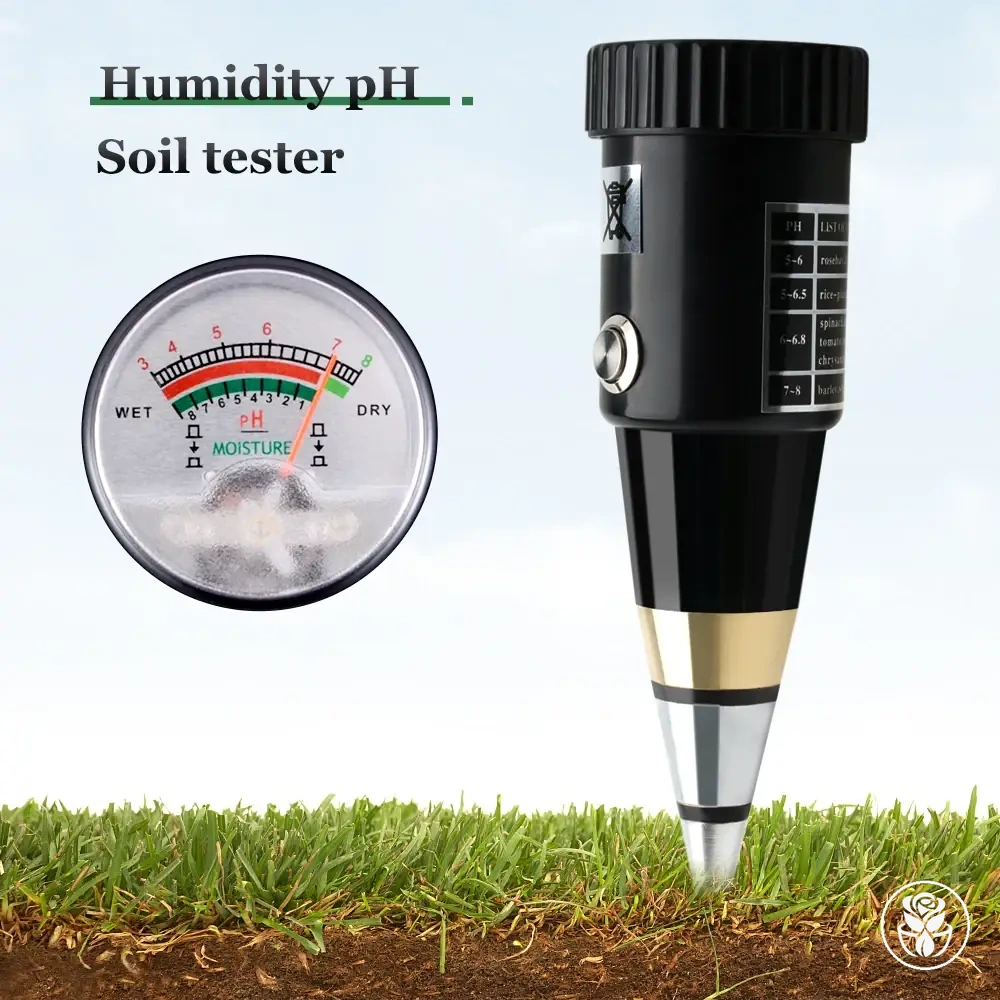
Starter supplies are easier to select when each item has a clear function. Potting mix supports the soil environment, a watering can helps manage water application, and gloves or hand tools can reduce handling difficulty. A moisture meter may help when moisture assessment is uncertain, while slow-release fertilizer may be useful only when plant condition and timing make feeding appropriate.
Starter supplies for simple potted rose care are easier to compare when essential functions are separated from optional conveniences. The image below highlights common beginner supplies and the roles they may serve during the first month.

- Potting mix: Must-have function for soil stability and root support. Optional convenience: specialized blends that may reflect preference rather than necessity.
- Watering can: Must-have function for controlled watering. Optional convenience: alternative designs that depend on user preference and handling needs.
- Gloves and hand tools: Must-have function when handling soil, containers, or routine adjustments. Optional convenience: larger tool collections that may not be needed during the first month.
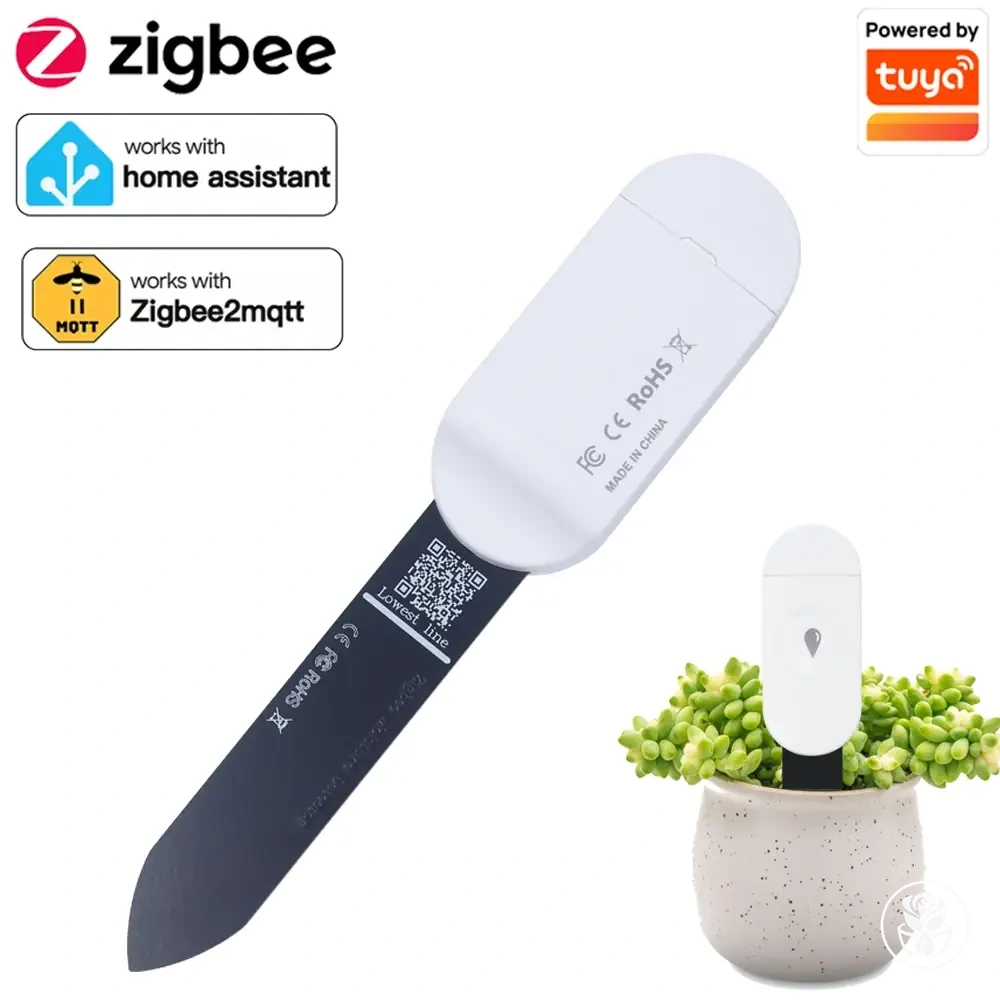
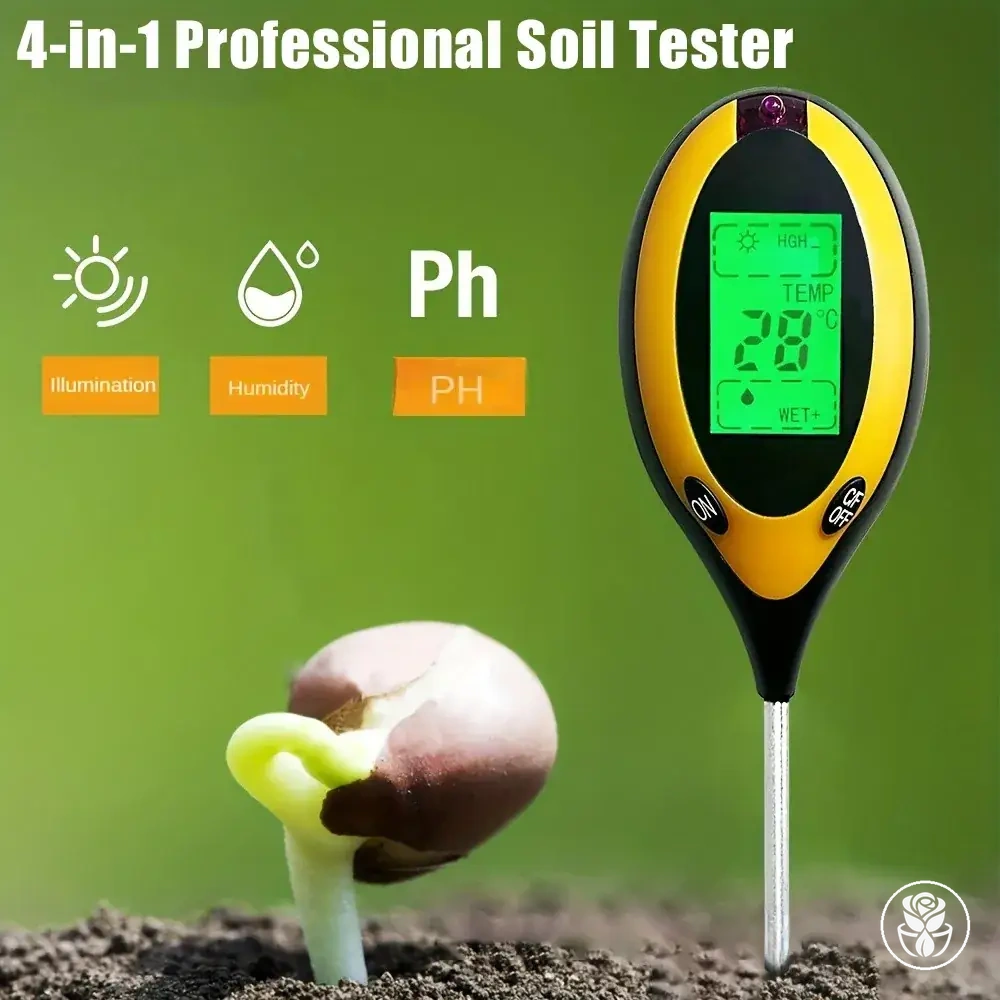
- Moisture meter: May help with moisture checking when observation skills are still developing. Optional convenience for users who already assess moisture confidently.
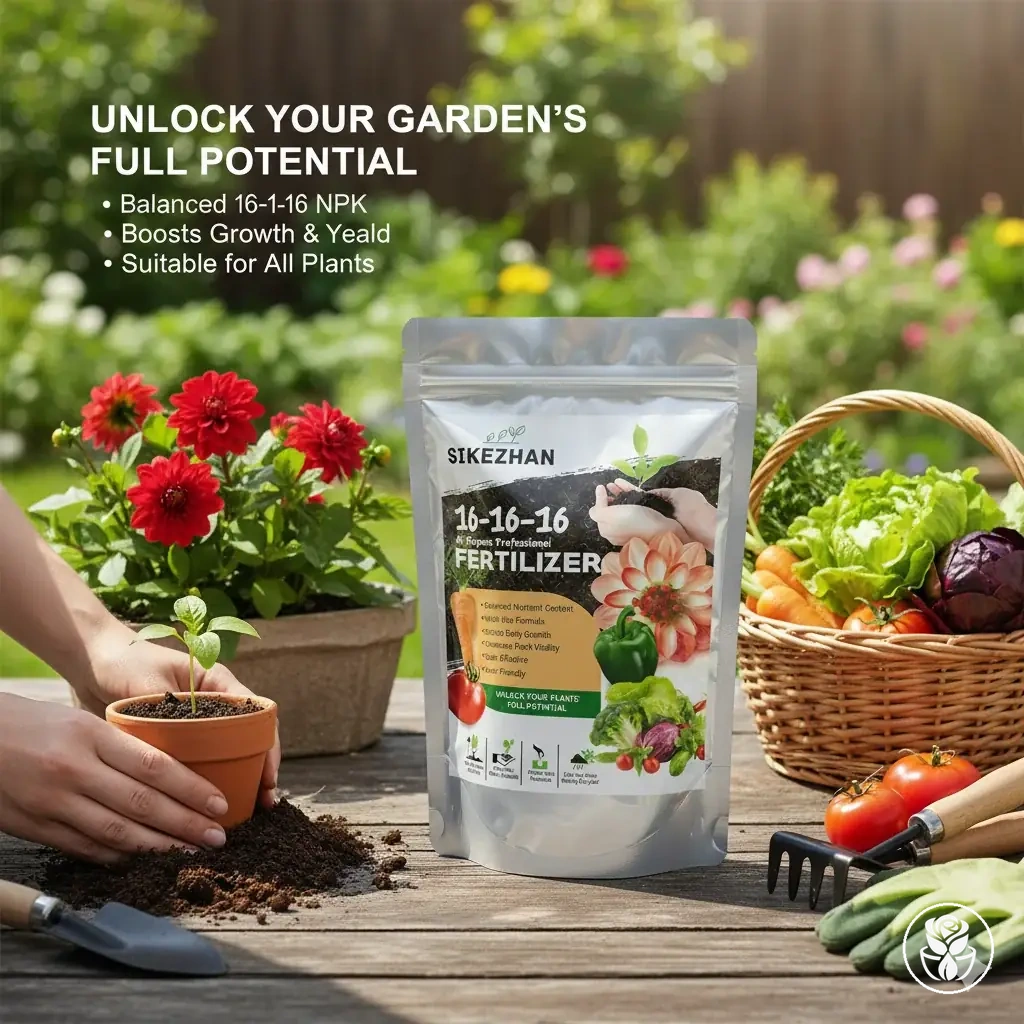
- Slow-release fertilizer: May support feeding when timing and plant condition indicate a need. Optional convenience because early care often depends more on observation than additional inputs.
Use necessity, risk reduction, ease of use, and timing as the final decision signals when choosing starter supplies. A rose care kit should remain practical and focused on function rather than encouraging unnecessary extras.
Potting mix, fertilizer, and moisture tools
Potting mix, fertilizer, and moisture tools depend on how they support root moisture, feeding safety, and early stress prevention during the first month. These materials help a beginner make more informed container rose care decisions when paired with observation of soil conditions and plant response. Their role is to improve decision control rather than replace judgment.
The comparison below organizes how potting mix, fertilizer, and moisture tools contribute to beginner care decisions. Each item influences a different aspect of moisture management, feeding caution, or observation.
| Item | What it controls | Beginner caution | Use in first month |
|---|---|---|---|
| Potting mix | Root moisture and drainage | Soil mix behavior can vary with weather, watering, and container conditions | Supports moisture balance and root comfort |
| Fertilizer | Feeding support | Fertilizer strength should match plant condition and feeding safety goals | May be useful when feeding decisions require caution |
| Moisture meter | Moisture checking | Readings may be misleading when used without checking the soil surface | Can support watering decisions when paired with observation |
A moisture meter should support observation rather than replace checking the soil surface and overall plant condition. Use potting mix, fertilizer, and moisture tools as decision-support materials that help evaluate root moisture and early care conditions without relying on a single reading or input.
Watering can, gloves, and beginner hand tools
Watering can, gloves, and beginner hand tools depend on how effectively they improve control, safety, and consistency during the first month of container rose care. A small set of beginner tools is often sufficient when each tool supports a clear task. Selection should focus on practical handling rather than expanding the supply list.
The checklist below organizes watering can, gloves, and beginner hand tools by function, beginner benefit, and misuse to avoid. Each tool supports routine care through better control or handling consistency.
- Watering can: Spout control can help direct water toward the soil surface with greater consistency. Avoid a forceful stream that may disturb soil or affect moisture distribution.
- Gloves: Gloves can provide protection during soil handling and routine plant care. Avoid gloves that reduce grip or make delicate tasks harder to manage.
- Trowel: A trowel can help with planting and small soil adjustments in a pot. Avoid using oversized tools when precise handling is more useful.
- Hand tool: A small hand tool set can support routine container tasks without adding unnecessary equipment. Avoid selecting tools that do not serve a clear first-month purpose.
- Tool handling: Consistency improves when tools remain comfortable and practical to use during routine care. Avoid relying on additional tools instead of observing plant and soil conditions.
Choose watering can, gloves, and beginner hand tools based on control, handling comfort, and consistency rather than the number of tools available.
This chart organizes the essential beginner tools for first-month container rose care by tool type, benefit, and misuse to avoid.

First-month care checks after planting
First-month checks after planting depend on observing sunlight, position, watering, soil moisture, and early growth response before making adjustments. A newly planted container rose may respond differently as roots settle into the pot, and drying speed can vary with weather, drainage, and placement. The goal is to monitor conditions and respond to visible changes rather than follow an exact schedule.
First-month care checks are most useful when each observation connects to a clear action. Sunlight and position influence growth response, while watering and soil moisture influence root conditions. Transplant stress may appear as temporary slowing of growth or minor leaf changes, so observations should be considered alongside weather conditions and pot drying speed rather than as isolated signals.
First-month care checks after planting become easier when observation points are viewed together. The image below highlights common cues related to soil surface condition, leaf appearance, light direction, watering checks, and early growth response.

- Sunlight: If growth appears weak or uneven, observe whether light exposure supports healthy growth. Adjust position only when current placement appears to limit growth response.
- Position: If weather changes noticeably, observe whether the container location increases wind, heat, or moisture stress. Reassess placement before changing other care factors.
- Watering: If the soil surface dries quickly, check deeper soil moisture before watering again. Let drying speed guide decisions rather than routine frequency.
- Soil moisture: If soil remains wet longer than expected, observe drainage and weather conditions before adding more water. Use current conditions to guide the next action.
- Light feeding: If the container rose appears settled and shows early growth, consider whether light feeding matches current plant condition. Avoid treating feeding as the first response to every change.
- Early growth: If new growth develops gradually, continue observing before making multiple adjustments. If transplant stress is visible, prioritize stable conditions and consistent care.
After first-month observation becomes more predictable, the monthly maintenance schedule can help organize longer-term care decisions. This section remains focused on early after-planting checks rather than seasonal planning or detailed troubleshooting.
Sunlight and position checks
Sunlight and position checks start with observing how light exposure and placement affect a newly planted container rose during the first month. A light check helps confirm usable sunlight, while a placement check helps identify signs of excessive heat or wind stress. These observations should focus on visible plant response rather than fixed exposure expectations.
Sunlight and position checks are most useful when they connect exposure conditions to leaf response and drying speed. A balcony or patio may provide suitable light at one time of day but create reflected heat or stronger airflow at another. Pot movement, weather changes, and surrounding surfaces can influence how a container rose responds even when the position appears similar.
The checklist below organizes sunlight and position checks through simple observation points.
- Light duration: Observe whether the container rose receives consistent sunlight and whether growth response appears balanced over time.
- Reflected heat: Observe nearby walls, railings, or hard surfaces that may increase heat around the container. If leaves appear stressed during warmer periods, reflected heat may be a contributing factor.
- Airflow: Observe whether wind exposure changes across the balcony or patio. Strong airflow can increase drying speed and may influence leaf response.
- Pot movement: Observe whether the container shifts because of weather or routine handling. Small position changes can alter exposure conditions.
- Leaf response: Observe leaf appearance over time rather than after a single day. Consistent changes may provide a clearer signal than short-term weather variation.
Use sunlight and position checks as observation tools that help guide early care decisions without turning the process into a full placement guide or fixed light requirement.
This chart groups the key sunlight and position observations for a newly planted container rose into three categories: light exposure, heat and airflow, and position and plant response.

Watering and soil moisture checks
Watering and soil moisture checks start with verifying watering need through current conditions rather than a fixed calendar. A beginner container rose in the first month may dry at different rates depending on pot size, drainage, soil mix, weather, and plant response. The goal is to connect visible moisture signals to a safe watering decision.
Watering and soil moisture checks are most useful when multiple observations support the same conclusion. A dry soil surface does not always mean that the root zone is dry, and overwatering risk can rise when moisture remains below the surface. Pot weight, drainage flow, and leaf condition can provide additional context when a single moisture sign appears unclear.
The steps below organize watering and soil moisture checks through simple condition-to-decision logic.
- Check the soil surface: If the soil surface appears dry, treat it as an observation rather than a watering instruction. Confirm conditions below the surface before deciding on the next action.
- Check root zone moisture: If the root zone still feels moist, additional watering may not be necessary. Continue monitoring until moisture conditions change.
- Check pot weight: If the pot feels noticeably lighter than before, soil moisture may be decreasing. Use this signal together with soil observations rather than on its own.
- Check drainage flow: If water moves through the pot differently than expected, review drainage and soil moisture conditions before adjusting care. Drainage flow can influence how long moisture remains available.
- Check leaf condition: If leaf condition changes, compare that observation with soil moisture, weather, and recent watering decisions. Avoid relying on a single symptom as proof of watering need.
After using these local checks, the simple watering routine can help clarify ongoing care decisions. Watering and soil moisture checks should remain condition-based because drying speed and moisture retention can vary across containers and growing conditions.
Light feeding and early growth checks
Light feeding and early growth checks depend on plant condition rather than a routine fertilizer schedule. During the first month, a beginner container rose may respond differently based on soil quality, product strength, watering patterns, and recent planting conditions. Feeding restraint is often more useful than adding fertilizer before early growth signals become clear.
Light feeding should follow observation of plant condition, soil quality, and fertilizer timing. Slow-release fertilizer may be considered when the container rose appears settled and growing, but the decision can vary with product strength and current growing conditions. A recently repotted rose or a nursery-fed rose may not need immediate feeding because existing nutrients may still be available. New leaf growth, buds, and weak shoots should be treated as observation points rather than automatic feeding triggers.
The checklist below organizes light feeding and early growth checks through condition-based decisions.
- New leaf growth: If new leaf growth appears steady, continue observing plant condition before changing the feeding approach.
- Buds: If buds begin to develop, use feeding restraint and assess overall plant condition rather than expecting immediate blooms.
- Weak shoots: If weak shoots appear, review soil, watering, and growing conditions before assuming additional fertilizer is needed.
- Slow-release fertilizer: If light feeding is being considered, follow the product label and avoid treating stronger inputs as a faster solution.
- Nursery-fed rose or recent repotting: If the rose was recently repotted or may be a nursery-fed rose, delaying fertilizer may be appropriate until plant condition becomes clearer.
Use light feeding and early growth checks as observation-based decisions that prioritize plant condition and feeding restraint over early fertilizer use.
Beginner mistakes that weaken container roses early
When early weakness appears in a container rose during the first month, beginner mistakes may be linked to watering, drainage, light conditions, pot choice, or an unsuitable rose selection. These early errors can affect growth response and make care decisions harder to interpret. A mistake-to-risk review helps identify likely causes without assuming a single symptom has one exact explanation.
Beginner mistakes that weaken container roses early should be evaluated through moisture conditions, drying speed, sunlight exposure, and overall plant response. Mild beginner adjustment errors can often improve with careful observation and small corrections, while ongoing decline despite reasonable adjustments may require deeper troubleshooting. The checklist below organizes common container rose mistakes by visible signal, likely effect, and a safer correction.
- Overwatering: Signal: soil remains wet for extended periods. Likely effect: early weakness may develop when excess moisture persists. Safer correction: review watering decisions using current moisture conditions and drying speed.
- Blocked drainage: Signal: water drains slowly or remains trapped. Likely effect: root conditions may become less favorable. Safer correction: check whether drainage pathways remain open and functional.
- Weak light: Signal: growth appears slower or less balanced. Likely effect: growth response may be reduced. Safer correction: review sunlight exposure and placement before changing other care factors.
- Wrong pot: Signal: moisture becomes difficult to manage consistently. Likely effect: watering decisions may become less predictable. Safer correction: compare pot characteristics with drainage, soil behavior, and rose growth habit.
- Unsuitable rose: Signal: the rose struggles to match available space or care conditions. Likely effect: maintenance demands may increase. Safer correction: assess whether rose characteristics align with the intended container environment.
- Multiple care changes at once: Signal: plant response becomes difficult to interpret. Likely effect: the source of early weakness may remain unclear. Safer correction: make one adjustment at a time and observe the result before changing additional factors.
Use beginner mistakes, visible signals, and likely effects as diagnostic clues rather than exact diagnoses. If early weakness continues after reasonable adjustments, deeper troubleshooting may be more appropriate than repeating the same correction.
This chart identifies common beginner mistakes in container rose care and provides safer corrections for each.

Overwatering and blocked drainage risks
When wet soil persists for extended periods, overwatering or blocked drainage may be contributing to early container rose stress signals. These conditions can resemble other first-month problems, so a single symptom should not be treated as an exact diagnosis. The safer approach is to compare moisture conditions, drainage behavior, and plant response before making changes.
Overwatering and blocked drainage risks are easier to evaluate when each signal is paired with a specific check. The diagnostic table below organizes common water-risk indicators and helps distinguish moisture-related concerns from other possible causes of early weakness.
| Signal | Likely water issue | Check | What it means |
|---|---|---|---|
| Wet soil | Overwatering may be contributing | Check whether wet soil persists below the surface | Persistent moisture can suggest watering exceeds current drying speed |
| Saucer water | Saucer water may slow drying | Check whether water remains in the saucer after watering | Standing water can keep the pot environment wetter for longer |
| Blocked holes | Blocked drainage may restrict water movement | Check whether drainage holes allow water to exit freely | A drainage problem can increase moisture retention in the soil |
| Yellowing leaves | Water stress may be one possible cause | Compare leaf changes with wet soil, drainage, and drying speed | Yellowing leaves do not mean overwatering in every case |
| Slow drying | Moisture may remain in the pot too long | Check pot conditions, soil behavior, weather, and drainage | Slow drying can make watering decisions harder for a beginner |
Use these signals as water-risk clues rather than proof of a specific cause. If severe symptoms continue despite reasonable adjustments, deeper troubleshooting may be needed beyond this beginner checklist.
Wrong pot, weak light, and unsuitable rose choice
When weak growth or difficult care patterns appear during the first month, a wrong pot, weak light, or unsuitable rose choice may be creating extra pressure on a beginner container rose routine. These selection mistakes can change watering needs, growth response, and maintenance difficulty even when basic care remains consistent. Weak growth should be interpreted cautiously because more than one factor may contribute to the first-month outcome.
Wrong pot, weak light, and unsuitable rose choice are easier to evaluate when fit signals are separated from mismatch risks. The comparison block below connects common selection mistakes to likely effects and a safer direction for review.
| Mismatch | Effect | Safer direction |
|---|---|---|
| Wrong pot | Pot depth or drainage quality may make moisture and drying speed harder to manage | Review whether the pot supports suitable drainage and root space for the container rose |
| Weak light | Growth response may appear slower or less balanced when sunlight availability is limited | Assess sunlight and placement conditions before assuming a watering or feeding problem |
| Unsuitable rose | Growth habit may create higher maintenance demands or a poor fit for the available space | Compare rose growth habit with the intended container environment and care expectations |
Use selection mistakes as possible contributors rather than a single cause of weak growth. The most useful check is whether pot conditions, light availability, and rose growth habit align with the first-month care environment.
Beginner kit versus separate rose care supplies
Beginner kit versus separate rose care supplies depends on whether convenience or selection control better matches first-month container rose needs. Kit value often depends on supply relevance, existing tools, pot and soil requirements, and beginner confidence. A bundle can reduce setup effort when most included items are useful, while separate supplies can provide more control when care needs are already understood.
Kit value should be judged by suitability rather than item count. Duplicate items may add little value when a beginner already owns basic tools. Soil suitability, fertilizer suitability, and moisture tool usefulness can vary by container size, drainage conditions, watering habits, and growing environment. Separate supplies may offer more flexibility when specific pot, soil, or moisture-management decisions are important.
Beginner kit versus separate rose care supplies becomes easier to evaluate when the decision criteria are compared directly. The table below organizes common trade-offs and decision signals.
| Option | Best fit | Trade-off | Decision signal |
|---|---|---|---|
| Beginner kit | May suit a beginner who needs most starter supplies in one package | Duplicate items or less relevant supplies may reduce kit value | Choose when convenience and setup simplicity matter more than item-level selection |
| Separate supplies | May suit a beginner who wants control over pot, soil, and moisture-tool choices | Requires more decisions and item comparison | Choose when flexibility and suitability are more important than bundle convenience |
A comparison with the buying checklist can help identify whether duplicate items, soil suitability, fertilizer suitability, or moisture tool needs are already covered. If most required supplies are still missing, a rose care kit may save effort. If existing tools already meet many needs, separate supplies may help prevent unnecessary waste.
Use relevance, flexibility, and first-month requirements as the final decision criteria rather than assuming one option provides greater value in every situation.
The products below are useful examples for comparing available options. Before buying, check that the compatibility criteria, key features, and product details match your needs.