
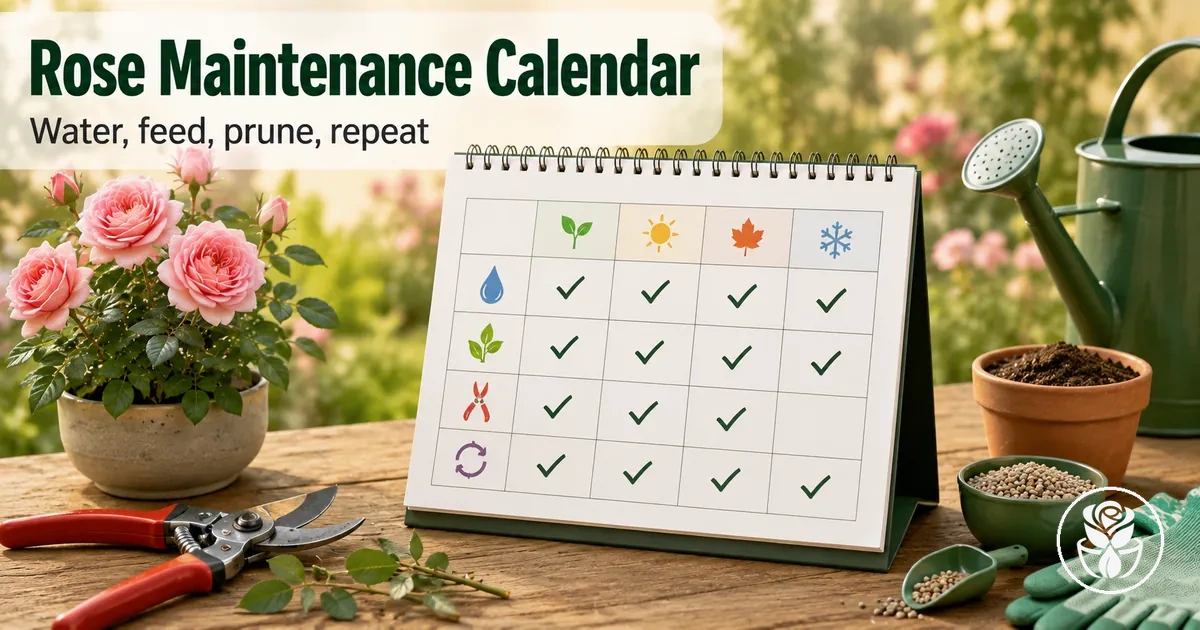
Container Rose Maintenance Calendar for Pots
A container rose maintenance calendar is a care schedule that organizes recurring potted rose care across weekly, monthly, and seasonal time ranges. It helps keep watering, feeding, pruning, cleanup, observation, and placement checks consistent while accounting for changes in climate, pot condition, and rose condition. The timing can vary because a container rose does not follow a fixed rule in every setting.
A container rose needs regular maintenance because a pot can change growing conditions more quickly than a garden bed. Moisture levels may shift faster, nutrients are limited by soil volume, root space is restricted, and temperature exposure can affect the container from multiple sides. These factors can change how often a potted rose needs attention. The main container-specific risk is that changes in moisture, drainage, or exposure may create stress before they are noticed.
The maintenance calendar organizes care into weekly, monthly, and seasonal rhythms rather than exact dates. Weekly observation helps track moisture, drainage, foliage condition, and overall pot condition. Monthly reviews can help organize feeding, pruning, cleanup, and growth-stage adjustments, while seasonal care reflects changes in climate and exposure. The summary below shows how the timing ranges fit together within a container rose maintenance rhythm.
The Container Rose Maintenance Calendar for Pots groups recurring tasks by timing range so the care schedule remains organized without becoming a universal calendar. Use the summary as a planning framework and adjust timing when container condition, weather, exposure, pot size, or rose growth changes.
- Weekly: Moisture check, visual observation, drainage review, bloom-cycle monitoring, and container stability checks.
- Monthly: Feeding review, light pruning assessment, cleanup of dead growth, soil surface evaluation, and care record updates.
- Seasonal: Adjust watering, feeding, pruning approach, placement checks, and overall seasonal care according to changing conditions.
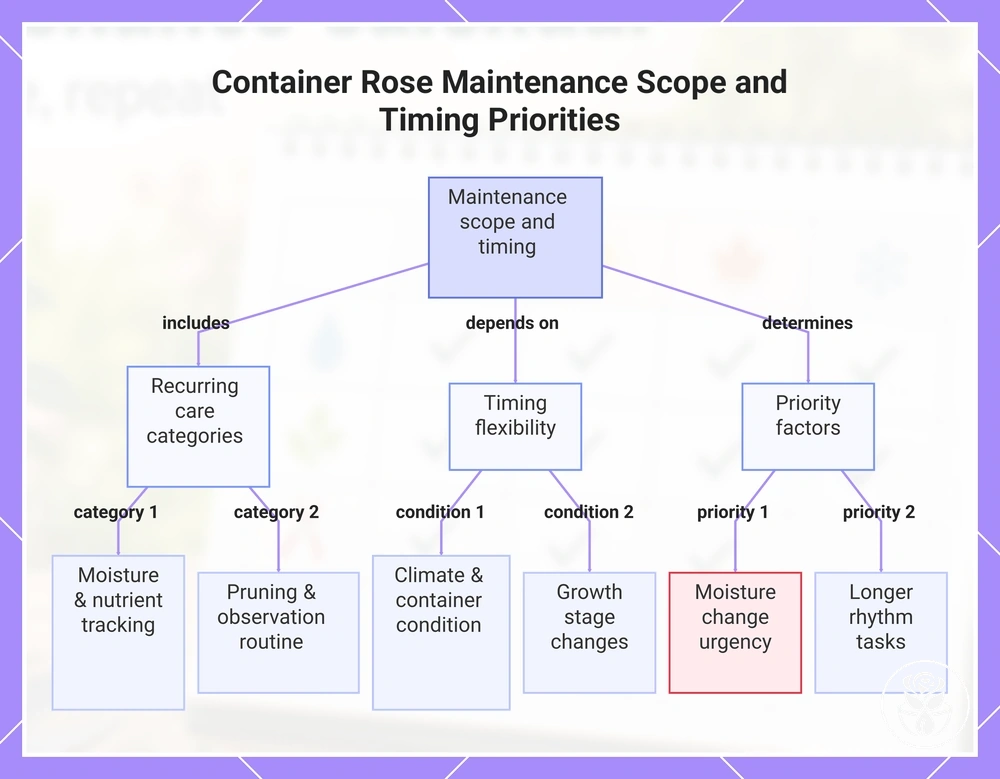
Container Rose Maintenance Scope and Timing Priorities
Maintenance scope defines the recurring care categories that belong inside a container rose schedule. The schedule coordinates care frequency, moisture change monitoring, nutrient depletion review, pruning window awareness, and observation routine checks so maintenance stays organized over time. Timing remains flexible because climate, container condition, and growth stage can change care needs.
Timing priorities help determine which maintenance categories may need attention sooner as conditions change. Moisture change often requires closer observation because container conditions can shift quickly. Nutrient depletion, pruning windows, cleanup needs, and routine checks usually follow a longer care rhythm. The importance of each maintenance priority can vary with container condition, exposure, pot size, and growth stage.
Container Rose Maintenance Scope and Timing Priorities organize maintenance risk by showing where attention may be needed across recurring care categories. The focus is on timing order and coordination rather than task-by-task instruction.
- Care frequency: Review routine checks according to changing growing conditions.
- Moisture change: Monitor shifts in moisture and drainage that may affect the container rose.
- Nutrient depletion: Assess when available nutrients may need reevaluation.
- Pruning window: Align pruning decisions with growth stage and plant condition.
- Observation routine: Watch for changes in foliage, blooms, cleanup needs, and overall container condition.
This schedule coordinates maintenance categories, while deeper task guidance belongs in the Container Rose Care System overview. Timing can still shift when climate patterns, exposure, container condition, or rose condition change.
This chart explains the main care categories within a container rose schedule, the flexibility of timing based on changing conditions, and the priority factors that determine which maintenance task needs earlier attention.
Weekly Container Rose Maintenance Checklist
A weekly checklist helps identify which container rose conditions need attention during active growth. Weekly checks focus on visible plant and pot signals so small issues can be noticed before they become larger maintenance concerns. Weekly checks identify conditions and guide a maintenance response rather than forcing fixed tasks.
Visible weekly signals often appear on the soil surface, foliage, blooms, stems, and container. Changes in moisture pattern, foliage condition, airflow, or container stability can indicate that the weekly routine needs adjustment. These observations connect a visible condition to an appropriate maintenance response. The Weekly Container Rose Maintenance Checklist below shows the main areas to verify each week.
Weekly Container Rose Maintenance Checklist labels the plant and pot areas checked each week and verifies the visible conditions that support routine inspection during active growth.

- Soil surface check: If the soil surface appears unusually dry, compacted, or disturbed, review current moisture conditions and adjust the maintenance response as needed.
- Moisture pattern check: If pot weight or moisture retention differs from recent observations, reassess watering timing in relation to weather and growth stage.
- Foliage condition check: If leaves show visible stress, discoloration, or damage, increase observation and review recent environmental changes.
- Spent blooms check: If faded blooms remain on the plant, include suitable cleanup within the weekly routine.
- Pest check: If insects or unusual markings are visible, continue observation and determine whether additional attention may be needed.
- Airflow check: If foliage appears crowded or airflow seems reduced, review surrounding growing conditions.
- Support check: If stems lean or growth becomes uneven, inspect supports and adjust them when appropriate.
- Container stability check: If the pot shifts, tilts, or becomes unstable after weather changes, restore stability and reassess placement.
After periods of heat or heavy rain, the same weekly checklist may reveal different moisture patterns, foliage responses, or container conditions. When visible conditions change, adjust the maintenance response according to current weather, growth stage, and plant condition.
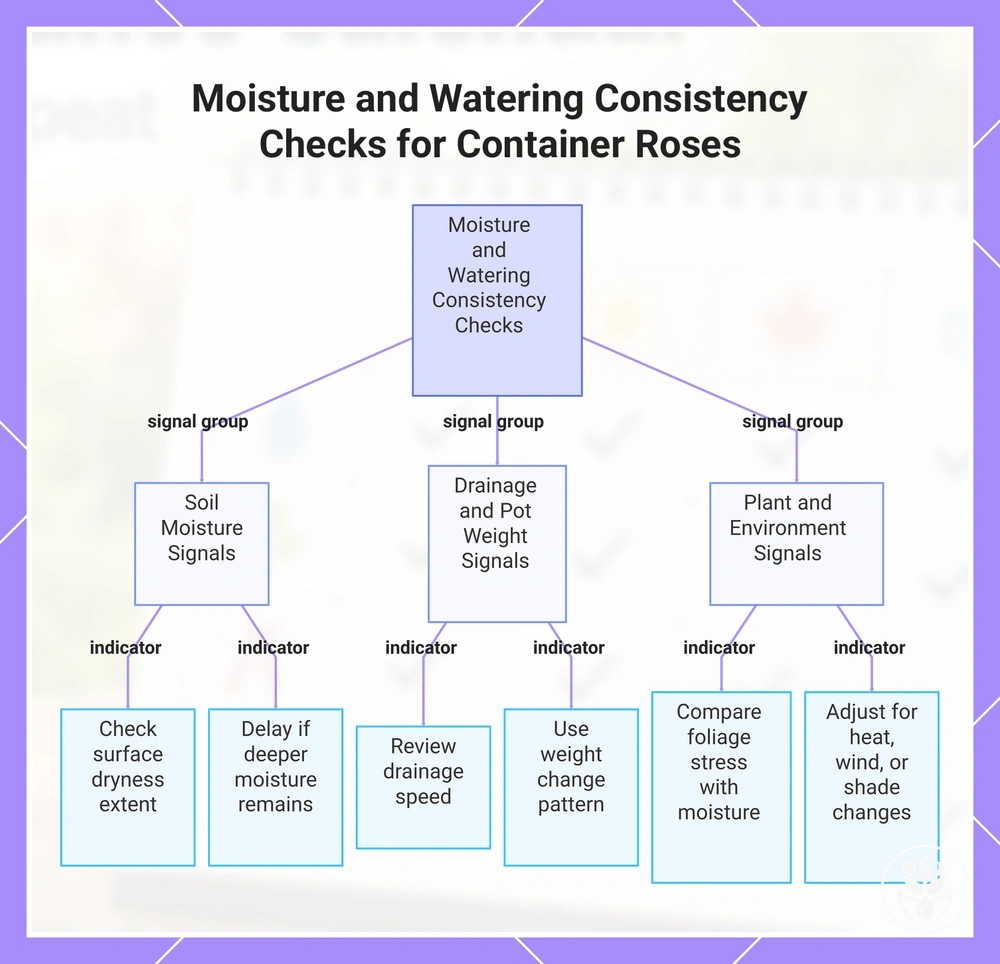
Moisture and watering consistency checks
A moisture check helps guide watering timing by showing how consistently a container rose retains and uses soil moisture. Watering consistency means adjusting timing according to current pot conditions rather than following a fixed interval. Weekly moisture checks help identify changes in drying rate, moisture retention, and drainage behavior.
Moisture and watering consistency checks verify whether soil and pot conditions support stable watering timing. The signals below help interpret current conditions before any watering adjustment is considered.
- Soil surface dryness: If the soil surface appears dry, check whether dryness extends below the surface before changing watering timing.
- Deeper moisture: If deeper moisture remains present while the surface looks dry, watering timing may be delayed depending on exposure and pot condition.
- Drainage speed: If wet soil persists longer than expected or drains unusually quickly, review drainage speed as part of the moisture check.
- Pot weight: If pot weight feels noticeably lighter or heavier than recent observations, use the change as a moisture pattern signal.
- Foliage response: If leaves or new growth show stress signs, compare foliage response with current soil moisture and recent weather conditions.
- Recent heat, wind, or shade: If exposure conditions change, moisture checks may lead to different watering timing decisions than in previous weeks.
In hot or windy placements, moisture conditions may change faster than in sheltered or shaded locations, which can alter how the same signals are interpreted. For broader timing guidance beyond these weekly checks, see the watering schedule.
This chart shows the key signals to check before adjusting watering timing, based on current soil, pot, plant, and environmental conditions.
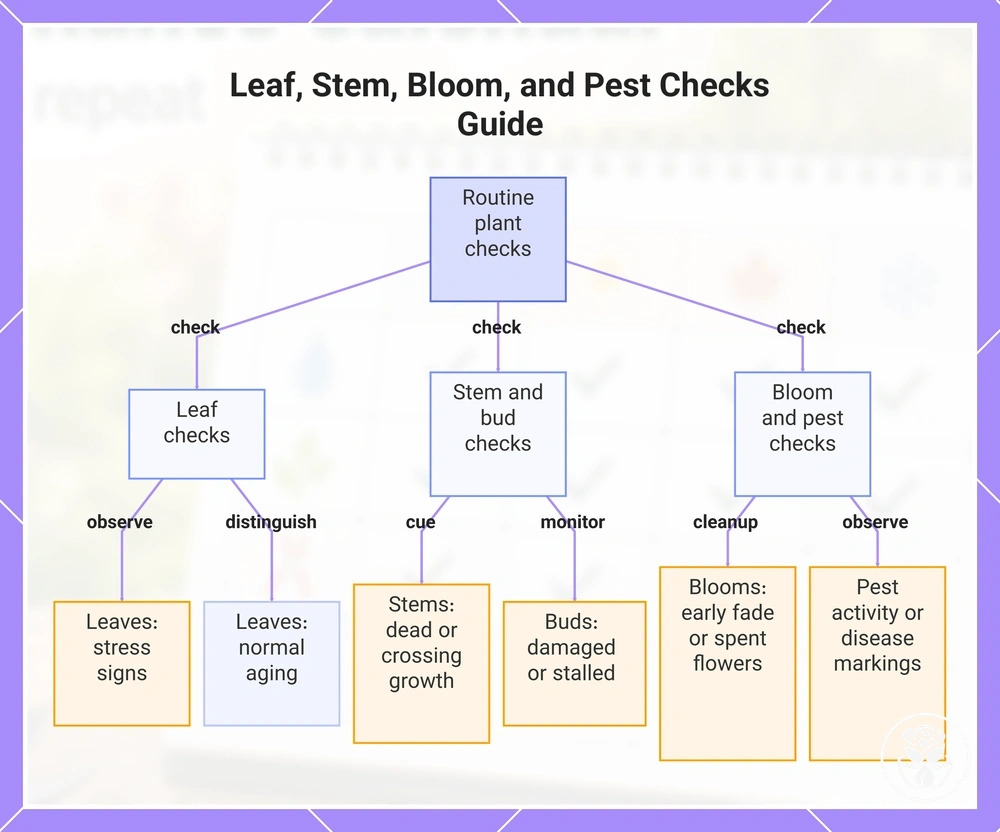
Leaf, stem, bloom, and pest checks
Leaf, stem, bloom, and pest checks help identify visible maintenance concerns before they develop into recurring problems. A visual inspection organizes attention around leaves, stems, buds, blooms, spent flowers, and pests so that a maintenance response can be based on observable plant conditions.
Leaf, stem, bloom, and pest checks organize routine observation of plant parts and visible cues that may require attention during weekly maintenance.
- Leaves: If leaves show yellowing, spots, or other stress signs, continue observation and compare changes across multiple inspections before choosing a maintenance response.
- Stems: If stems show dead growth, damage, or crossing growth, note the condition as a possible cleanup or pruning cue.
- Buds: If buds appear damaged, stalled, or uneven, monitor their development and compare them with the rest of the plant.
- Blooms: If blooms fade early or appear affected by recent weather, include the observation in the next plant check.
- Spent flowers: If spent flowers remain on the plant, consider routine cleanup to support appearance and airflow.
- Pests: If insect clusters or unusual activity appear on leaves, stems, buds, or the underside of foliage, continue observation and determine whether additional attention may be needed.
- Disease-like markings: If markings appear on leaves or stems, treat them as visual cues because similar signs may have multiple causes.
A few aging leaves on older growth can be a normal part of plant development, while repeated stress signs across both new and older foliage may justify closer observation. This contrast helps prevent overreaction to isolated changes while supporting a consistent maintenance response.
This chart shows the key plant parts and conditions to inspect during weekly maintenance, along with the recommended observation actions.
Monthly Care Calendar for Container Roses
A monthly care calendar organizes recurring container rose duties into a monthly review cycle. It groups feeding windows, soil refresh checks, pruning, deadheading, tool checks, pest observation, record keeping, and container cleanup so maintenance stays consistent while allowing timing to vary by growth stage and conditions.
Months work best as flexible timing bands rather than fixed dates. Climate, dormancy, growth stage, and recent weather can change when a task is appropriate. A monthly schedule helps organize maintenance reviews, but the condition of the rose and container should guide the final timing decision.
Monthly Care Calendar for Container Roses groups recurring maintenance duties into review periods that can be adjusted according to plant condition and local growing patterns. The image below organizes recurring tasks by monthly timing bands before the table lists the main checkpoints.

| Month or timing band | Main task | Check before doing it | Adjustment cue |
|---|---|---|---|
| Early active growth | Review feeding window and care log | Current growth stage and plant vigor | Delay or adjust when growth remains limited |
| Active growth period | Deadheading, light pruning, pest observation | Bloom condition, airflow, and visible growth | Increase observation after weather-related stress |
| Mid-season review | Soil refresh assessment and container cleanup | Soil condition, pot volume, and surface buildup | Adjust timing when the container remains stressed |
| Late growth cycle | Tool check and maintenance journal update | Recent pruning, cleanup, and inspection notes | Add observations when patterns begin to change |
| Slow-growth or dormancy period | Review future maintenance timing | Growth stage and seasonal slowdown | Reduce activity when the rose is dormant |
Monthly timing depends on climate, growth stage, and container condition. A task that fits one timing band in an active-growth period may shift when the rose is dormant, newly planted, recovering from heat stress, or growing under different seasonal conditions.
Record keeping can help identify recurring patterns in feeding windows, pruning decisions, pest observation, and timing adjustments. A simple care record or maintenance journal often makes monthly reviews easier to compare over time.
Feeding and soil top-up timing
Feeding timing and soil top-up belong in the monthly maintenance rhythm when container nutrient depletion, growth stage, and visible vigor indicate that the rose may benefit from review. Because soil volume is limited in a container, feeding timing and soil top-up should be adjusted according to current plant condition rather than a fixed calendar date.
Feeding timing and soil top-up decisions can be organized with the following criteria before making a maintenance adjustment.
| Timing signal | Maintenance response |
|---|---|
| Active growth stage with steady visible vigor | Review the current feeding window as part of the monthly routine. |
| Reduced soil volume or settling soil surface | Assess whether a soil top-up or top-dressing is appropriate. |
| Signs of nutrient depletion during routine observation | Reevaluate feeding timing in relation to recent growth and maintenance records. |
| Selected fertilizer type and recent watering pattern | Consider watering before feeding when soil conditions appear dry. |
| Changes in visible vigor or growth pattern | Adjust the fertilizing schedule to reflect current plant condition. |
Feeding timing may be reduced or paused when the rose appears stressed or begins moving toward dormancy because growth stage can change how the plant responds to additional nutrients. For broader clarification on fertilizer timing, review the dedicated fertilizer guidance before making major schedule adjustments.
Pruning, deadheading, and cleanup timing
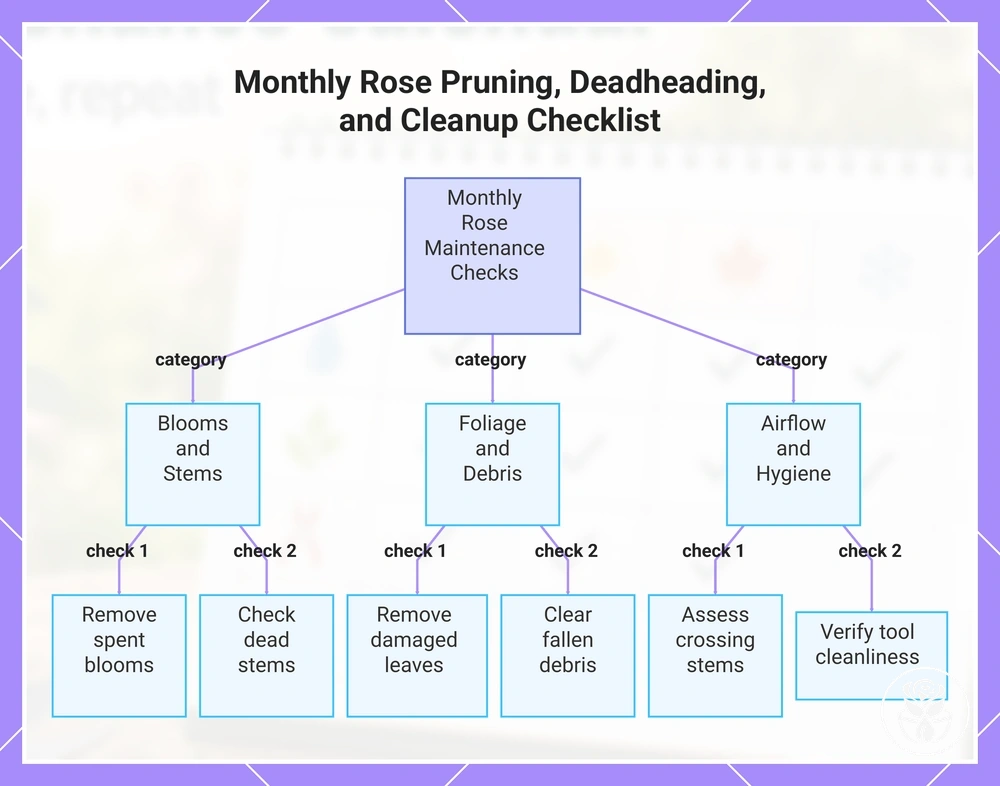
Pruning timing, deadheading, and cleanup belong in the monthly maintenance rhythm as light upkeep tasks that support airflow, bloom cycle management, and plant hygiene. Monthly attention focuses on spent blooms, dead stems, damaged leaves, and fallen debris, while larger pruning decisions may depend on growth stage, rose condition, and season.
Use the following mini-checklist to guide monthly cleanup observations and maintenance timing.
- Spent blooms: Remove spent blooms during routine deadheading to keep bloom cleanup current.
- Dead stems: Check for dead stems and remove them when safe handling and plant condition allow.
- Crossing stems: Note crossing stems that may affect airflow and assess whether light pruning is appropriate.
- Damaged leaves: Remove damaged leaves that no longer contribute to healthy growth.
- Fallen debris: Clear fallen debris from the soil surface as part of a plant hygiene check.
- Tool cleanliness: Verify tool cleanliness before and after cleanup tasks and handle cutting tools carefully.
A monthly cleanup session may include deadheading, removing damaged leaves, and clearing fallen debris, while a larger seasonal pruning session may involve broader structural review. Pruning timing should remain conditional because growth stage, rose condition, and seasonal changes can influence how much work is appropriate.
This chart shows the main checklist categories for monthly rose maintenance, including deadheading, leaf removal, and tool hygiene.
Seasonal Care Schedule for Potted Roses
A seasonal care schedule adjusts container rose maintenance across the growth cycle while preserving the overall care rhythm. Seasonal care changes how watering adjustment, feeding change, observation frequency, and pruning caution are approached because spring restart, summer heat, autumn slowdown, and winter handoff create different maintenance priorities.
Container exposure can change seasonal timing because pots respond differently to temperature, wind, sunlight, and moisture conditions than in-ground plantings. As a result, the same seasonal routine may progress earlier, later, or more gradually depending on climate, dormancy patterns, and container location.
Seasonal Care Schedule for Potted Roses clarifies how maintenance emphasis shifts through the year while keeping the calendar organized around observation and adjustment rather than fixed season dates. The image below compares the main maintenance emphasis by season.

| Season | Main maintenance focus | What changes | What to avoid |
|---|---|---|---|
| Spring restart | Resume routine observation and growth monitoring | Watering adjustment and feeding change may increase as active growth returns | Avoid assuming growth resumes at the same time every year |
| Summer heat | Monitor moisture and stress signals | Container exposure may require more frequent watering adjustment | Avoid treating all heat conditions as identical |
| Autumn slowdown | Track reduced growth and seasonal transition | Feeding change may become more conservative while cleanup needs can shift | Avoid maintaining peak-season routines without review |
| Winter handoff | Observe dormancy and reduced activity | Maintenance often becomes more observation-focused with pruning caution | Avoid applying a universal climate rule for dormancy timing |
Seasonal timing depends on climate, dormancy, and container exposure. A rose may move through spring restart, summer heat, autumn slowdown, or winter handoff differently from another plant, even when both follow the same seasonal care schedule.
Regional weather patterns can shift the timing of each care season. Use seasonal changes as observation cues rather than fixed seasonal thresholds, especially when growth patterns or dormancy behavior differ from previous years.
Spring restart and growth checks
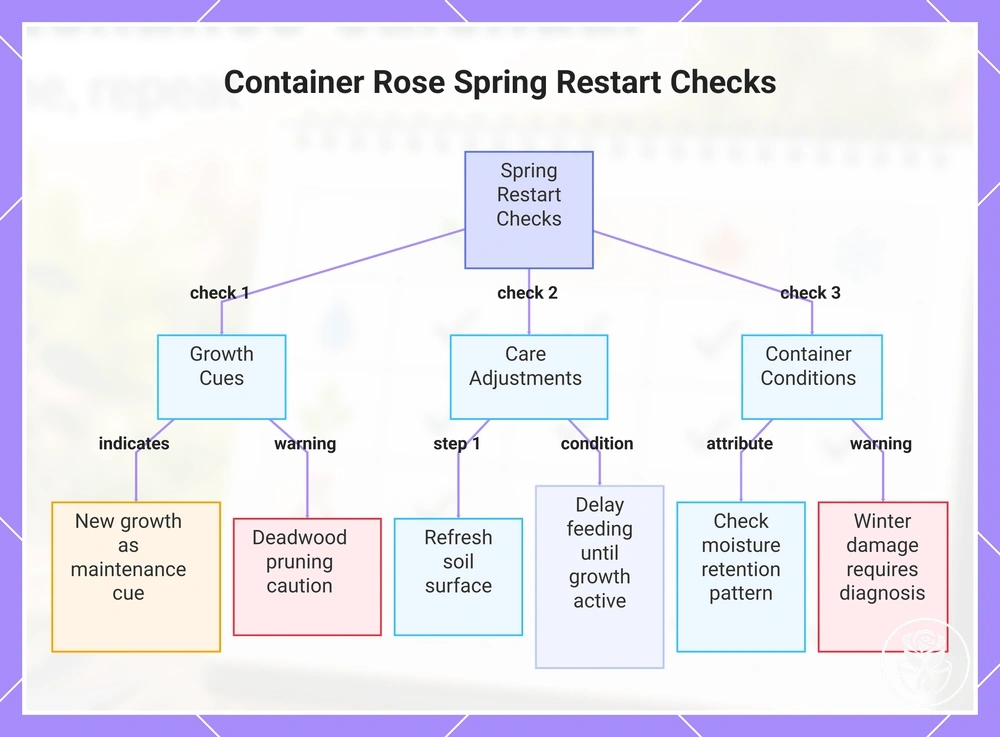
When a container rose begins moving out of dormancy or slower growth, spring restart checks help organize the shift back into active maintenance. Spring restart and new growth should be assessed through readiness checks rather than fixed timing because growth restart can vary with climate, rose condition, and container exposure.
- New growth: Check for new growth and use it as a cue to review the seasonal maintenance routine.
- Deadwood: Inspect for deadwood and use pruning caution when growth stage or rose condition remains uncertain.
- Soil surface refresh: Review the soil surface and refresh it when settling, debris, or compaction is visible.
- First feeding: Assess first feeding readiness after growth restart signals appear, and delay feeding if active growth remains limited.
- Moisture pattern: Check the moisture pattern to understand how the container is retaining and using water during early growth.
- Container stability and placement: Verify container stability and review placement changes that may affect light, exposure, or moisture conditions.
If severe winter damage appears beyond routine deadwood removal or normal spring checks, the condition may require diagnosis before additional maintenance decisions are made. Spring restart checks prepare the rose for active care, but they do not replace problem assessment when winter damage is extensive.
This chart outlines the main spring restart checks for container roses, covering growth cues, care adjustments, and container conditions.
Summer heat and watering adjustments
Summer heat increases drying speed and container temperature, so watering adjustments should respond to changing pot conditions rather than a fixed schedule. Summer maintenance focuses on stress prevention by monitoring moisture loss, pot exposure, and visible plant signals because drying speed can vary with pot size, wind, recent moisture conditions, and container exposure.
- Watering adjustment signals: Review moisture conditions more closely when drying speed increases during summer heat.
- Surface protection: Check whether surface protection supports moisture retention and helps reduce rapid soil drying.
- Afternoon heat exposure: Monitor afternoon heat because container temperature can rise more quickly in exposed locations.
- Leaf scorch signs: Treat leaf scorch as a caution signal that may indicate heat-related stress, exposure pressure, or moisture imbalance.
- Pest pressure: Increase observation when pest pressure appears to rise during hot weather care.
- Bloom cleanup: Remove spent blooms during the summer routine to support ongoing maintenance and plant observation.
Balcony, terrace, and full-sun containers may require closer observation because wind and direct exposure can increase drying speed and stress signals. When container exposure appears to influence moisture loss or a heat stress check, review placement checks as part of the maintenance decision rather than relying on a universal watering pattern.
Autumn slowdown and winter handoff tasks
Autumn slowdown reduces active maintenance and begins the winter handoff from growth-focused care to protection planning. As growth stage changes and dormancy approaches, maintenance priorities often shift toward observation, cleanup, and condition-based adjustments rather than encouraging new growth.
- Reduced feeding: Review reduced feeding as growth slows and active development becomes less consistent.
- Cleanup: Remove spent blooms, fallen debris, and aging plant material as part of routine cleanup.
- Weak growth inspection: Inspect weak growth and note stems or foliage that may require closer observation before dormancy.
- Watering moderation: Adjust watering moderation according to current moisture conditions, exposure, and changing growth activity.
- Pot stability: Check pot stability and container condition before seasonal weather patterns become more challenging.
- Cold exposure cues: Use cold exposure as a signal to review protection planning without relying on fixed seasonal thresholds.
Autumn slowdown is a handoff stage rather than a winter protection process, so timing and preparation may vary with climate and container exposure. For the next stage of seasonal planning, review winter care tasks when autumn maintenance signals indicate a transition toward dormancy.
Schedule Adjustments by Container Condition
Schedule adjustment for a container rose should follow container condition rather than a rigid calendar. Pot size, drainage, soil behavior, exposure, plant age, recent stress, repotting, and growth stage can all change care frequency. The goal is to adjust timing without assuming a guaranteed outcome.
Container condition changes how quickly care tasks become relevant. Smaller soil volume may change drying speed, drainage issues may change root risk, and exposure to heat, wind, or shade may shift observation needs. Recent stress, repotting, and growth stage can also make a routine task better delayed, reduced, or checked more often. A condition-based schedule keeps the calendar responsive without turning it into pot selection or soil setup guidance.
Schedule Adjustments by Container Condition organizes the main criteria that modify care frequency. Use the table to connect each visible or known condition with a timing adjustment and the reason for that change.
| Container condition | Attribute to check | Value or condition | Schedule adjustment |
|---|---|---|---|
| Pot size | Soil volume | Limited volume or faster drying speed | Check moisture more often when drying changes care frequency. |
| Drainage | Water movement | Slow drainage, wet soil, or uneven runoff | Delay watering when wet soil persists because root risk may increase. |
| Soil behavior | Moisture holding and surface condition | Compaction, crusting, or unusual drying | Review soil behavior before increasing watering or feeding tasks. |
| Exposure | Heat, wind, and shade | Stronger sun, wind, or reduced light | Increase checks when exposure changes stress or drying speed. |
| Plant age | Root and growth maturity | Young, recovering, or established plant | Adjust care frequency according to growth stability and visible response. |
| Recent stress | Plant response | Heat stress, pruning stress, or visible decline | Reduce or delay non-urgent tasks when stress signs remain present. |
| Repotting | Recovery stage | Recently moved into a new container | Delay feeding or heavy changes until the rose shows steadier growth. |
| Growth stage | Active growth, slowdown, or dormancy | Changing seasonal growth behavior | Shift timing when growth stage changes maintenance demand. |
Delay a routine task when the container remains wet, the rose shows recent stress, or repotting recovery is still visible. Reduce a task when growth slows or dormancy begins. Check more often when pot size, drainage, exposure, or soil behavior creates faster timing changes than the normal calendar expects.
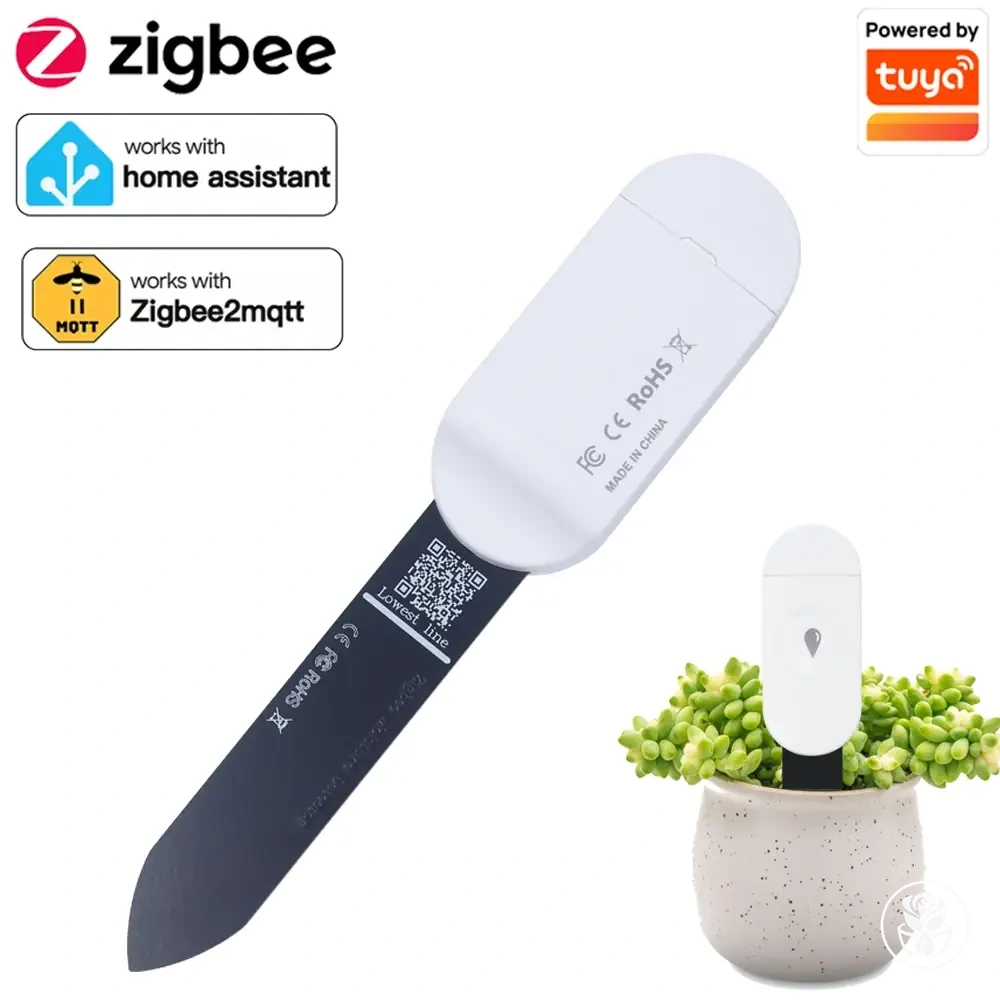
Product-neutral tools such as a care log, moisture notes, and routine observation can help compare container condition over time. Record keeping should support schedule adjustment by showing when care frequency changes, not by replacing direct checks of pot condition and plant response.
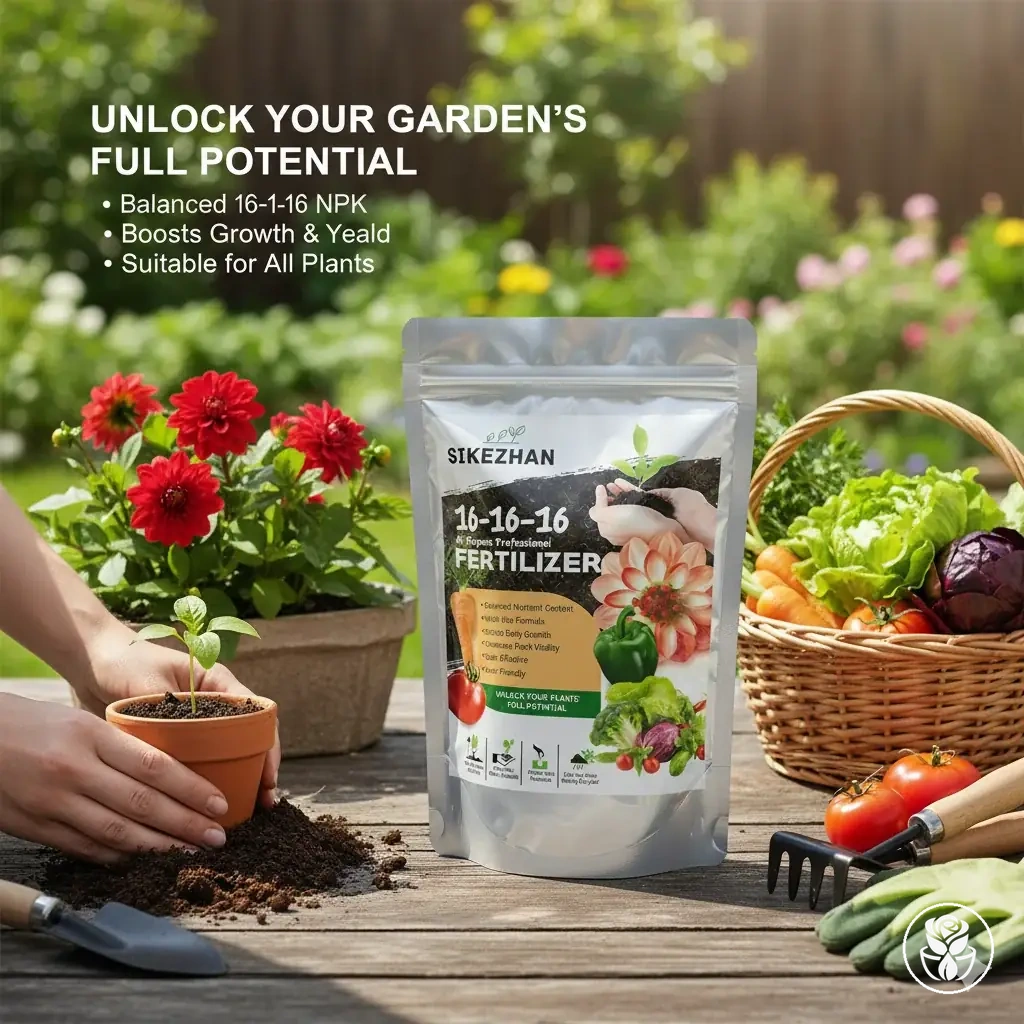
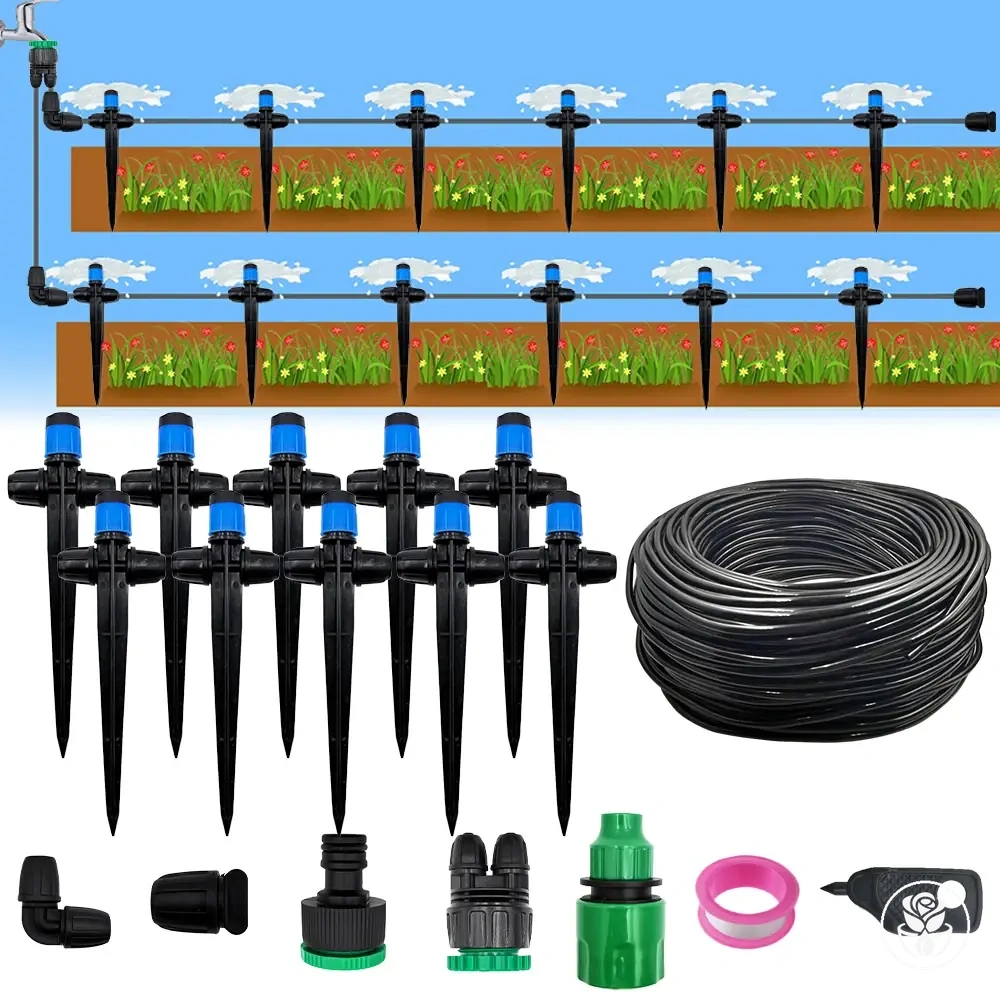
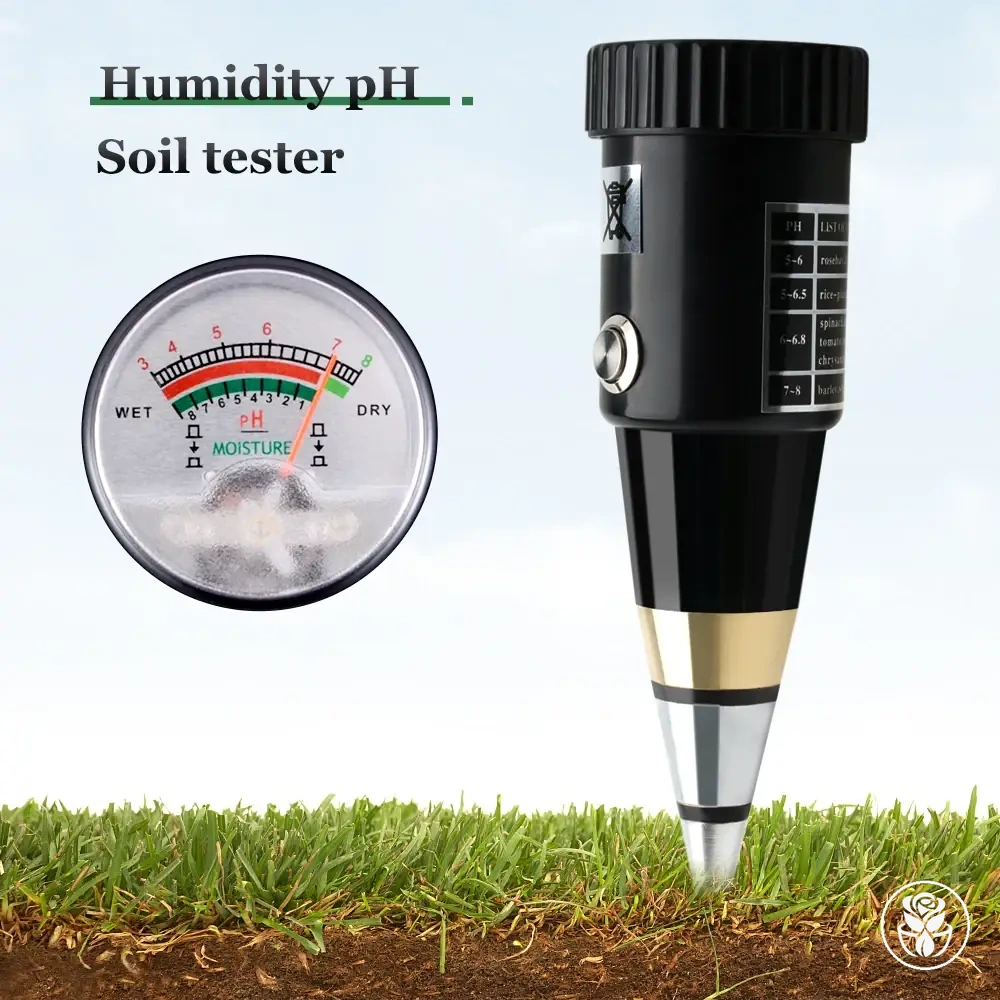
Here are product examples that may make comparison easier. Before buying, always review the compatibility criteria, essential features, and product details.

Care frequency by pot size, drainage, and exposure
Care frequency changes when pot size, drainage, and exposure change how quickly a container rose dries, retains moisture, or shows stress. Small pots, large pots, fast drainage, poor drainage, full sun, wind, and shade can affect watering checks, feeding caution, and stress observation in different ways. These conditions should guide check frequency without assuming the same result in every climate or soil mix.
Pot size, drainage, and exposure affect the same schedule differently because each condition changes drying rate or moisture retention. The comparison below shows how these condition patterns can shift care frequency while keeping the focus on routine maintenance.
| Condition pattern | Care frequency effect |
|---|---|
| Small pots with limited soil volume | Watering checks may need to happen more often when heat or wind increases drying rate. |
| Large pots with greater soil volume | Checks may focus more on deeper moisture and feeding caution when soil retains moisture longer. |
| Fast drainage | Care frequency may increase when water moves through quickly and stress observation becomes more important. |
| Poor drainage or persistent wet soil | Watering should be delayed and conditions checked carefully because slower drying can complicate routine timing. |
| Full sun or wind exposure | Watering checks and stress observation may increase when exposure raises drying pressure. |
| Shade or reduced exposure | Check frequency may slow when drying is slower, but soil behavior should still guide timing. |
Faster drying containers often need closer moisture observation, while slower drying containers may require delayed watering or more caution before feeding. If pot size, drainage, or exposure makes routine maintenance unreliable, review the condition before changing the schedule rather than assuming a new container or soil rebuild is automatically required.
Timing changes after planting, stress, or repotting
After planting, visible stress, or repotting, a timing change may be needed because the container rose is responding to a recent event rather than following the normal calendar. Root disturbance, transplant shock, heat stress, pest recovery, or soil refresh can temporarily change watering, feeding, and inspection timing during a recovery period.
Use these event-based adjustments to determine when routine tasks may need a temporary adjustment before returning to the normal calendar.
- Planting or repotting: Root disturbance may require closer watering observation and a feeding pause until growth stabilizes.
- Transplant shock: Visible stress after relocation may increase inspection timing until new growth or steadier plant response appears.
- Pruning response: A recent pruning event may temporarily delay non-urgent maintenance until routine growth resumes.
- Heat stress: Heat stress may increase watering checks and observation frequency until stress signs become less noticeable.
- Pest recovery: Pest recovery may require closer inspection timing before routine feeding and maintenance schedules resume.
- Soil refresh: A recent soil refresh may change moisture behavior, so normal timing may resume when watering patterns become more consistent.
Return to the normal calendar when growth stabilizes and routine moisture and inspection patterns become more predictable. The timing of that transition depends on the recent event, container conditions, and visible plant response.
Recurring Problems to Catch During Maintenance Checks
When recurring problems appear during maintenance checks, repeated symptoms should trigger a maintenance review rather than an immediate diagnosis. Yellowing leaves, wilting, blackened stems, persistent wet soil, poor bloom, pest clusters, and leaf spots can act as warning signs that a routine care factor may need closer inspection.
Visible signs are most useful when grouped by the next maintenance check they suggest. A single symptom may have multiple explanations, while repeated symptoms can reveal a problem pattern. Maintenance checks help connect warning signs to moisture review, feeding timing, light exposure, pruning caution, or inspection frequency without assuming a confirmed cause.
Recurring Problems to Catch During Maintenance Checks can be organized with the diagnostic checklist below, which connects each visible sign to a maintenance review point and an escalation cue.
| Visible sign | Maintenance check | What it may indicate | When to escalate |
|---|---|---|---|
| Yellowing leaves | Moisture review and watering pattern | May indicate a moisture-related issue when symptoms repeat | When yellowing spreads or continues after routine review |
| Wilting | Heat exposure and watering checks | May indicate stress related to heat or moisture conditions | When wilting persists beyond normal day-to-day variation |
| Blackened stems | Pruning caution and inspection | May indicate a disease-like sign or damaged growth | When darkening continues or affects additional stems |
| Persistent wet soil | Drainage and watering frequency review | May indicate slower drying and increased root risk | When soil remains wet through repeated maintenance checks |
| Poor bloom | Feeding timing, light exposure, and growth stage review | May indicate that current conditions are limiting bloom development | When bloom performance continues to decline over time |
| Pest clusters or leaf spots | Inspection frequency and plant observation | May indicate a condition that needs deeper troubleshooting | When signs increase, spread, or repeatedly return |
Maintenance checks are intended to recognize warning signs, not provide final diagnoses. If recurring problems continue, worsen, or repeatedly return after routine review, move to troubleshooting recurring problems for deeper evaluation rather than assuming a single cause.